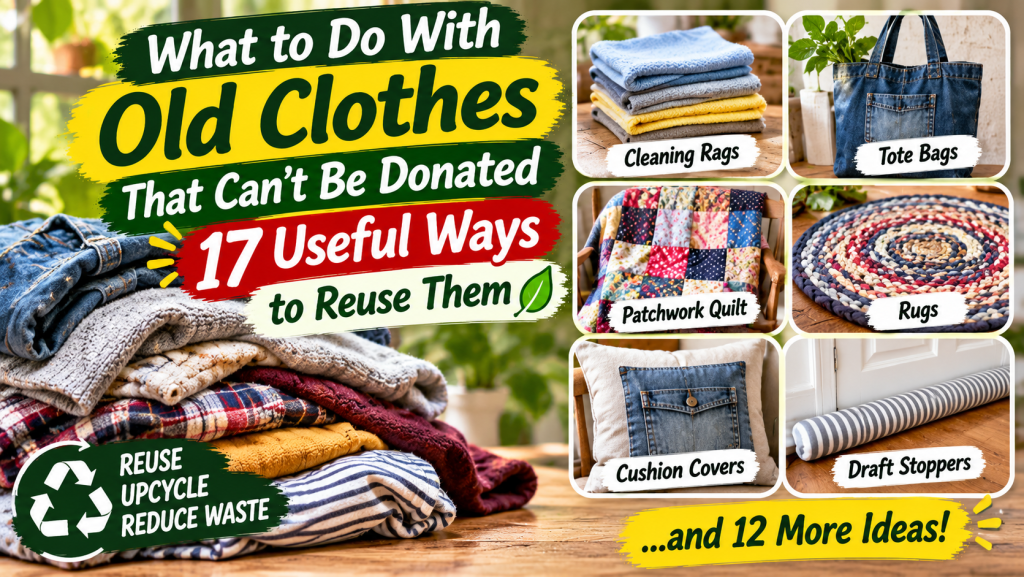
What to Do With Old Clothes That Can’t Be Donated: 17 Useful Ways to Reuse Them
A shirt with a torn seam, faded jeans, a stretched sweater or a towel with permanent stains may no longer be suitable for a charity shop. But that does not mean it has no value. Before throwing old clothes away, look at the fabric, the damage and the jobs it could still do around your home.
There are plenty of practical ways to reuse worn-out clothing, from making cleaning cloths and plant ties to sewing a patchwork cushion or sending clean, unusable textiles to a specialist recycling collection. The best option depends on the material and its condition.

Before You Start: Sort Clothes by Fabric and Condition
Spread the clothes out and group them by material and condition. A cotton T-shirt is useful for absorbent rags, while denim is better for durable patches, bags and mats. Stretchy jersey can be cut into strips, and a shirt with a damaged hem may still have good buttons or large fabric panels.
| What you have | Good reuse options | Check first |
|---|---|---|
| Soft cotton T-shirts | Cleaning cloths, plant ties, T-shirt yarn, produce bags | Remove printed or rough areas if they are unsuitable for the task. |
| Old towels and flannel | Absorbent rags, mop pads, workshop cloths | Do not reuse fabric that smells musty or has mould. |
| Denim and thick trousers | Patches, tool rolls, bags, kneeling pads, rugs | Check for worn-through areas and metal hardware. |
| Shirts, dresses and sheets | Gift wrap, aprons, pillow covers, patchwork | Wash and press the fabric before cutting. |
| Mixed or synthetic fabrics | Some sewing projects, organizers or specialist textile recycling | Blends and trims can make recycling or composting unsuitable. |
17 Useful Ways to Reuse Old Clothes That Can’t Be Donated
Cut Cotton T-Shirts into Cleaning Rags
Best for: cotton T-shirts, pajamas and sheetsCut clean cotton garments into squares or rectangles for wiping counters, polishing, dusting and cleaning spills. Use a rotary cutter or sharp scissors and make several sizes. Knit T-shirt fabric often does not fray much, so the edges can be left raw; woven cotton may need a quick hem if you want it to last longer.
Useful tip: Keep separate cloths for kitchens, bathrooms, windows and oily jobs. Wash reusable rags separately when needed.
Make Reusable Mop Pads or Dusting Cloths
Best for: fleece, flannel, old T-shirts and soft cottonUse a worn sweatshirt or soft T-shirt to make washable dusting squares or a simple mop pad. Cut the fabric to fit your mop head, then sew or attach it securely using the fasteners designed for your mop. Avoid loose fabric that could catch in moving parts or leave threads behind.
Turn Jersey Scraps into Soft Plant Ties
Best for: stretchy cotton T-shirts and jerseyCut a T-shirt into long strips and use them to loosely support tomato stems, climbing plants or young branches. Soft jersey is gentler than thin wire or hard plastic ties. Leave room for the stem to grow and check ties regularly so they do not tighten around the plant.
Use Fabric for Reusable Gift Wrapping
Best for: scarves, shirts, lightweight cotton and sheetsCut a sound section of fabric into a square and use it to wrap a gift with a knot or ribbon. This is inspired by furoshiki, the Japanese practice of wrapping and carrying items in cloth. A neat square from an old shirt or sheet can be reused many times.
Sew a Simple Tote or Produce Bag
Best for: sturdy T-shirts, shirts and lightweight denimA large T-shirt can become a casual carry bag, while a shirt with a strong button placket can be turned into a small storage or shopping bag. Reinforce the handles and seams, and do not use a homemade bag for loads heavier than its stitching can safely support.
Cut Denim into Patches for Repairs
Best for: jeans, denim jackets and thick cottonSave the strongest sections of old jeans to patch knees, reinforce workwear, repair bags or cover worn elbows. Cut around thin or damaged areas and make the patch larger than the hole. A contrasting fabric can make the repair look intentional rather than hidden.

Make a Patchwork Quilt or Lap Blanket
Best for: clean cotton, flannel and other compatible fabricsCut sound areas into squares or rectangles and join them into a patchwork top. Mix fabrics with similar weight and washing requirements so the finished piece is easier to care for. Use a suitable backing and batting, and leave out fabric that is very thin, scratchy or likely to shrink differently.
Braid a Small Rag Rug
Best for: cotton T-shirts, sheets and sturdy fabric stripsCut fabric into long strips, join the ends and braid them together. Coil the braid into a small mat and stitch the rows securely. A braided rug can work beside a bed or in a low-traffic spot. Make sure it lies flat and use a non-slip backing where needed to reduce trip risks.
Sew New Cushion or Pillow Covers
Best for: shirts, sweaters, dresses and larger fabric panelsA shirt front, patterned dress or section of a sweater can become a decorative cushion cover. Keep interesting details such as pockets, buttons or embroidery as part of the design. Choose fabric that is still strong enough to handle regular use and washing.
Make a Door Draft Stopper
Best for: clean, dry fabric scraps and old trousersSew a long fabric tube from a trouser leg or a section of an old curtain, then fill it with clean, dry fabric offcuts. Close the ends firmly. Keep the stopper away from heaters, open flames and damp areas, and do not use material that can shed loose fibres.
Create a Tool Roll or Paintbrush Wrap
Best for: denim, canvas-like fabric and thick cottonUse a sturdy trouser leg or jacket panel to sew a roll with pockets for paintbrushes, garden tools, crochet hooks or craft supplies. Add a tie made from a fabric strip. Avoid using thin fabric for sharp tools unless the edges are protected and the material is strong enough.
Make Drawer Organizers or Storage Pouches
Best for: shirts, sheets, denim and lining fabricTurn sleeves, trouser legs or larger panels into small pouches for cables, sewing supplies, travel accessories or reusable shopping bags. Add a drawstring or button closure if needed. Label the pouches so small household items are easy to find.
Use Large Pieces as Drop Cloths or Protective Covers
Best for: old sheets, curtains and large cotton garmentsKeep a sheet or large garment for protecting floors during painting, covering a work surface during gardening or shielding stored items from dust. Secure it so it cannot blow away or become a trip hazard. Do not use a fabric cover near hot equipment or open flames.
Ask an Animal Shelter About Old Towels and Blankets
Best for: clean, absorbent towels and blanketsSome animal shelters, rescue groups and veterinary clinics use old towels or blankets for cleaning and bedding. Contact the organization first: some accept them, while others have strict requirements or cannot take used textiles. Only offer items that are freshly washed, fully dry and free from holes or loose threads that could create a hazard.
Make T-Shirt Yarn for Crochet or Weaving
Best for: stretchy cotton jerseyCut a T-shirt body into a continuous strip, gently stretch the strip so its edges curl, and wind it into a ball. Use the yarn for sturdy baskets, coasters, simple mats or other projects suited to bulky material. Remove seams and thick printed sections that interrupt the strip.
Save Buttons, Zippers, Elastic and Other Useful Parts
Best for: shirts, jackets, trousers and bagsBefore cutting a garment into scraps, remove working buttons, zippers, hooks, buckles, drawstrings and elastic that is still in good condition. Store them in a labelled container for future mending and sewing. Reusing a zipper or a set of matching buttons can save a trip to the craft shop.
Use a Dedicated Textile Recycling or Take-Back Program
Best for: clean, dry textiles with no useful home reuseIf a garment is too worn for another household project, look for a textile collection point, municipal textile recovery service or retailer take-back scheme. Some programs accept torn or stained garments for wiping cloths, fibre recovery or other industrial uses; others accept only certain materials. Check the provider’s rules before dropping anything off.
When Reusing at Home Is Not the Best Option
Some clothes are too damaged, heavily worn or made from mixed materials that are difficult to repurpose. In that case, a specialist textile recovery route may be more practical than trying to make something you will never use.
- Look for a dedicated textile collection: Check your local council, waste authority or recognised textile recycler.
- Check retailer take-back schemes: Some clothing brands collect textiles, but accepted items and conditions vary.
- Keep textiles out of ordinary mixed recycling unless instructed: Loose clothing can be rejected by standard recycling systems. Use a textile-specific service.
- Prepare items as requested: Some collectors require clean and dry material, paired shoes or separate bags for different textiles.
For example, the US Environmental Protection Agency advises checking local charities and retail programs for damaged clothing, while New York State’s textile reuse and recycling guidance describes repair, resale and textile recovery routes. Your local rules may be different.
What Not to Do With Old Clothes
- Do not put textiles into a regular curbside recycling bin unless the local authority specifically tells you to.
- Do not pass on or repurpose damp, mouldy, pest-infested or chemically contaminated clothing.
- Do not assume every animal shelter wants old fabric. Ask first and follow its hygiene requirements.
- Do not compost synthetic fabrics or blended clothing in a home compost bin. Even natural fibres may contain dyes, finishes, thread and trims that make composting unsuitable.
- Do not keep making projects just to use up scraps. Choose items you genuinely need, then recycle the remaining clean textile through an appropriate collection.
Quick Guide: Match the Clothing to the Best Reuse Idea
| Clothing item | Try this first | Another option |
|---|---|---|
| Old cotton T-shirt | Cleaning cloths | T-shirt yarn or plant ties |
| Worn-out jeans | Denim patches | Tool roll or rag rug |
| Old towel | Absorbent cleaning cloths | Ask a local animal shelter |
| Worn shirt | Save buttons and zipper | Gift wrap or storage pouch |
| Old sheet | Drop cloth | Gift wrap or patchwork |
| Stretchy sweater | Pillow cover | Warm fabric scraps for a craft project |
Final Thoughts
Clothes that cannot be donated can still be useful. A worn T-shirt may become cleaning cloths, old jeans can provide strong patches, and a faded sheet can protect a table during a messy project. When a garment has no practical second use, a dedicated textile recycling program may be the next best step.
The goal is not to turn every scrap into a craft project. It is to make thoughtful use of the fabric that is still safe and useful, and to choose a responsible route for the rest.
Make Your Home a Little More Waste-Conscious
Explore more practical ideas for reusing everyday items, reducing household waste and making sustainable choices.
Visit Before We Sleep for more sustainable living and home ideas →
Frequently Asked Questions
What can I do with clothes that are too damaged to donate?
Use clean fabric for household rags, patches, rugs, pouches, draft stoppers or craft projects. If you cannot reuse it, check whether a local textile recycler or retailer take-back scheme accepts damaged garments.
Can old clothes go in the recycling bin?
Usually not in a standard household recycling bin. Textile fibres can tangle sorting equipment, and many recycling programs do not accept clothing. Use a dedicated textile collection service if one is available in your area.
Can I turn old clothes into cleaning rags?
Yes. Clean cotton T-shirts, towels, flannel and sheets can make useful wiping cloths. Separate cloths by task and wash them after use. Avoid using fabric that is mouldy, oily with hazardous substances or chemically contaminated.
Can I compost old cotton clothes?
Do not put ordinary clothing straight into a home compost bin. Garments may contain synthetic thread, elastane, dyes, finishes, buttons and zippers. Composting is only worth considering for clearly identified untreated natural fibres in a suitable system, and it is not a general solution for mixed clothing.
Will animal shelters accept old clothes or towels?
Some shelters and veterinary clinics accept clean towels or blankets, but policies differ. Contact the organisation before dropping items off and ask which sizes, materials and conditions they can use.
Where can I recycle old clothes that cannot be reused?
Check your local council or waste authority, textile recycling centres and clothing retailer take-back programs. Confirm that the scheme accepts the fabric type and condition before taking your items there.
Should I wash clothes before textile recycling?
Follow the collection provider’s instructions. Many schemes ask for textiles to be clean and dry, even if they are too worn to wear. Wet or mouldy clothing can contaminate other collected materials.
Sources and Further Reading
- New Mexico State University Extension: Rags to Riches — Recycling and Upcycling Old Clothes — practical reuse projects including dust cloths, rag rugs, plant ties, stuffing and quilts.
- New York State Department of Environmental Conservation: Textile Reuse and Recycling — repair, resale and textile recovery ideas.
- US Environmental Protection Agency: How Do I Recycle Common Recyclables? — check local options for damaged clothing and shoes.
- Brisbane City Council: Clothing and Textile Recycling — reuse and textile collection guidance, including checking with shelters before offering towels or blankets.
- Massachusetts Department of Environmental Protection: Clothing and Textile Recovery — options for reuse, resale and textile drop-off programs.
Note: Textile collection rules, accepted materials and take-back services vary by country and municipality. Confirm local requirements before dropping off clothing.