Christmas Cactus Care and Flowering: How to Get Beautiful Blooms
Learn how to water, feed, prune and encourage a Christmas cactus to flower again. This practical guide covers light, temperature, long nights, bud drop and post-flowering care.
A Christmas cactus can produce a spectacular display of pink, red, white or purple flowers during the cooler part of the year. However, it needs slightly different care from a desert cactus. It comes from humid, shaded rainforest habitats, so it prefers filtered light, an airy potting mix and more regular moisture than many spiny cacti.
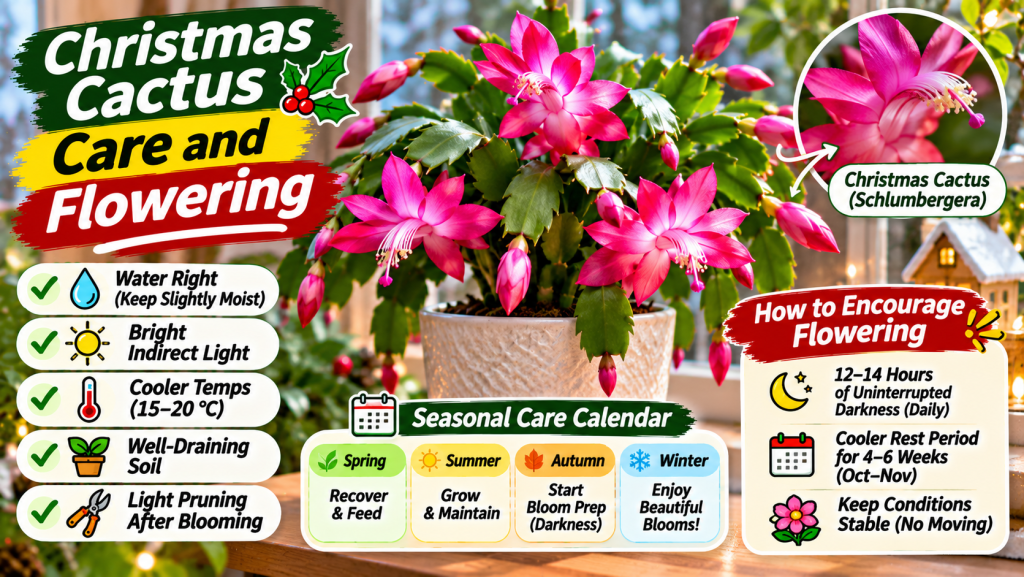
Fortunately, Christmas cactus care and flowering becomes much easier once you understand its seasonal cycle. Give the plant bright indirect light while it grows, then provide a cooler period and long, uninterrupted nights to encourage flower buds. After buds appear, keep conditions steady so they can open without dropping.
1. What Is a Christmas Cactus?
The Christmas cactus belongs to the genus Schlumbergera. Unlike desert cacti, it is an epiphytic cactus: in its natural Brazilian rainforest habitat, it grows on trees or among accumulated organic material rather than in dry desert soil. Its flattened, jointed green sections are technically stem segments, and flowers usually develop at the tips.
There is also some naming confusion in garden shops. Thanksgiving cactus is often sold as Christmas cactus, and the two are closely related but have different segment shapes. A typical Thanksgiving cactus has pointed, claw-like teeth along the edges. A true Christmas cactus usually has smoother, rounded scallops. The blooming season can overlap, so the segment shape is a more reliable clue than the flowering date.
Stem segments tend to have softer, scalloped margins. Flowers are often associated with the Christmas season, although cultivar and growing conditions affect timing.
Segments usually have sharper, claw-like projections. It often flowers earlier, but is frequently labelled as Christmas cactus in shops.
Plant naming varies between retailers and references. The care advice in this article is intended for commonly sold holiday Schlumbergera hybrids.
2. Light and the Best Location
Place your Christmas cactus where it receives bright, indirect light. An east-facing window is often suitable because it provides gentle morning sun. A bright position near a south- or west-facing window can also work if the plant is screened from harsh midday or afternoon rays.
Too much direct sunlight can cause the stem segments to turn pale, reddish or yellow. On the other hand, a very dark corner may produce weak growth and fewer flowers. Therefore, aim for bright filtered light during the day and darkness at night when you are preparing the plant to bloom.
3. How to Water a Christmas Cactus
Christmas cactus likes more moisture than a desert cactus, but it cannot sit in soggy compost. The goal is evenly moist, well-aerated soil during active growth, with a little less water during the pre-flowering rest period and after flowering.
When should you water?
- Check the top 2–3 cm (about 1 inch) of potting mix with your finger.
- If that upper layer feels dry, water thoroughly until excess water drains from the bottom.
- Empty the saucer or decorative outer pot so the roots do not stand in water.
- Allow the mix to dry slightly before watering again; do not follow a rigid daily schedule.
In a warm, bright room, the plant may use water more quickly. In a cool room or during its resting period, the mix will dry more slowly. For that reason, always check the soil before watering rather than assuming it needs water every week.
Watering during bud formation
As autumn flowering conditions begin, reduce watering modestly. Let the top few centimetres dry between waterings, but do not allow the whole root ball to become bone dry. Once small flower buds are visible, return to steadier watering while still allowing excess water to drain away.
4. Choose an Airy Soil Mix and a Pot with Drainage
Because this plant naturally grows in pockets of organic material in trees, it benefits from a loose, airy medium that holds some moisture while allowing oxygen to reach the roots. A heavy, compacted mix can stay wet for too long and encourage root rot.
A simple starting mix is:
- 2 parts quality peat-free houseplant or coir-based potting mix;
- 1 part fine orchid bark or another clean, chunky bark component;
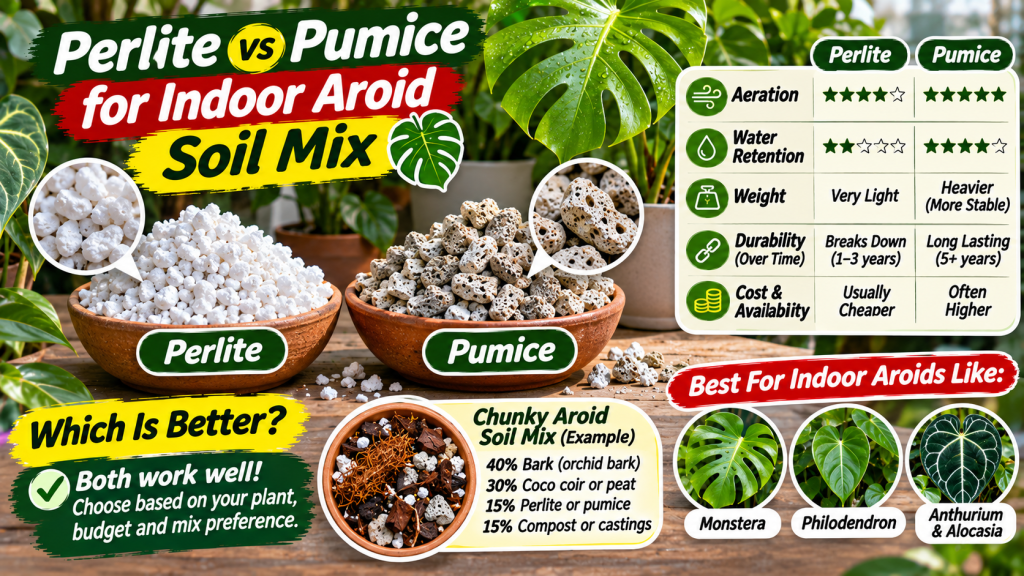
- 1 part perlite or pumice to improve aeration and drainage.
Use a pot with open drainage holes. Christmas cactus generally flowers well when slightly snug in its container, so do not move it into a very large pot unnecessarily. Repot when the roots have filled the container or the mix has broken down, preferably in spring after flowering.
5. Fertilizing and Pruning
Fertilizing
During active spring and summer growth, feed with a balanced liquid houseplant fertilizer at half the label strength, following the product directions. A modest, regular feeding routine is preferable to heavy applications. Stop or reduce feeding as the plant enters its autumn bud-setting period and during its post-flowering rest.
Do not rely on a high-phosphorus “bloom booster” to force flowers. The main flowering signals are the correct day length and cooler conditions, together with a healthy plant. Excess fertilizer can also leave salts in the potting mix and damage roots.
Pruning for a fuller plant and more flowers
Flowers form at the tips of the stem segments. A plant with more branching stems can therefore produce more flowering tips over time. After flowering, in spring, gently twist or snip off one or two terminal segments from selected branches. This encourages branching below the cut.
You can use the removed segments to make new plants. Let the cut ends dry for a day or two, then place them shallowly in a lightly moist, free-draining propagation mix in bright indirect light.
6. How to Make a Christmas Cactus Bloom
The most important part of Christmas cactus care and flowering is the autumn bud-setting period. Holiday Schlumbergera respond to shorter days and longer nights. Cooler night temperatures can also help initiate flower buds.
Give it long, uninterrupted nights
A practical method is to provide around 12–14 hours of continuous darkness each night for approximately six weeks. During the remaining hours, keep the plant in bright indirect light. A spare room or naturally dark area can work; alternatively, use a ventilated dark cover that does not press against the stems.
Provide a cooler night temperature
Where possible, keep nights cool—roughly 13–18°C (55–65°F) is a useful range cited in extension guidance. The Royal Horticultural Society describes a cooler autumn rest around 12–15°C (54–59°F). Keep the plant protected from frost and avoid sudden temperature swings. It should not be chilled below its safe minimum; the RHS advises keeping these tender plants above 10°C (50°F).
What to do when buds appear
Once you can see small buds at the stem tips, return the plant to its normal bright, indirect-light position. Resume regular but careful watering. Most importantly, keep its location and conditions steady. Do not repeatedly rotate, repot or move a plant that is already carrying buds.
Christmas cactus bloom planner
Choose the date you hope to see flowers. This simple planner counts back six weeks as an approximate start for the bud-setting routine.
This is a planning estimate, not a flowering guarantee. Some plants need more time, and the response varies with cultivar and growing conditions.
7. Seasonal Christmas Cactus Care Calendar
Use the following cycle as a guide. Adjust it to your climate and the plant’s actual growth rather than relying only on calendar months.
| Stage | What to do | Water and feeding |
|---|---|---|
| After flowering | Allow a short rest. Remove faded flowers and keep the plant in bright, indirect light. | Water less often; pause fertilizer while growth is slow. |
| Spring and summer growth | Encourage healthy new segments. Prune lightly after flowering if you want more branching; repot only if needed. | Water when the upper mix dries; feed lightly during active growth. |
| About six weeks before flowering | Provide long, uninterrupted nights and cooler nights if possible. | Reduce watering slightly; stop routine feeding while buds are forming. |
| Bud development | Return to a stable, bright position and avoid moving the pot. | Resume careful regular watering; do not leave the mix soggy. |
| Flowering | Keep away from heaters, cold draughts and sudden temperature changes. | Maintain moderate moisture and allow drainage. |
8. Common Christmas Cactus Problems and Fixes
Why is my Christmas cactus not flowering?
The most common reasons are nights that are too short, artificial light after dark, warm night temperatures, or a plant that is not healthy enough to set buds. Start with six weeks of long, uninterrupted darkness and cooler nights. Also check that the plant receives bright daytime light and is not waterlogged.
Why are the flower buds dropping?
Bud drop can follow sudden changes in temperature, light, humidity or watering. A move from a cool shop to a warm room may also disturb a plant in bud. Once buds form, keep the cactus in one stable position, away from radiators, air-conditioning vents and draughty doors. Avoid letting the potting mix become completely dry or waterlogged.
Why are the stems limp or wrinkled?
Wrinkling can result from underwatering, but a plant can also wilt when roots have rotted in wet compost. Check the mix and roots before adding more water. If the soil is wet and the plant is limp, improve drainage and inspect for dark, mushy roots.
Why are the stem segments turning yellow or red?
Strong direct sun can scorch or bleach the segments. Move the plant to bright filtered light. Red or purplish colouring can also be a stress response to intense light or temperature conditions, so review its position and watering routine.
What if the plant is growing but producing no buds?
Healthy vegetative growth does not automatically mean flowering conditions have been met. Review the night routine: even a nearby lamp or regular room lighting can interrupt the dark period. In addition, make sure the nights are cooler than the daytime conditions.
9. Frequently Asked Questions
How often should I water a Christmas cactus?
There is no fixed weekly schedule. Water when the top 2–3 cm of mix feels dry, then let excess water drain away. Water use changes with room temperature, light, pot size and season.
How many hours of darkness does a Christmas cactus need to flower?
A common practical routine is 12–14 hours of uninterrupted darkness each night for about six weeks, combined with bright indirect light during the day. Cooler night temperatures can also help flowering.
Can a Christmas cactus bloom twice in one year?
Some holiday cactus plants can flower more than once under suitable conditions, but repeat flowering is not guaranteed. Give the plant time to rest and rebuild growth between flowering cycles.
Should I mist my Christmas cactus?
It appreciates moderate humidity, but misting is not essential if the room already has suitable humidity. Good air movement and a free-draining potting mix are more important than keeping the stems constantly wet.
Should I repot a Christmas cactus while it has buds?
It is better to wait until after flowering. The plant prefers a snug pot, and moving or disturbing it while buds are developing can contribute to bud drop.
Is a Christmas cactus a desert cactus?
No. Schlumbergera holiday cacti are rainforest epiphytes. They need bright filtered light, an airy mix and more regular moisture than desert cacti, although their roots must never sit in waterlogged soil.
Final Thoughts
Successful Christmas cactus care and flowering is mostly about balancing the plant’s growing season with its autumn rest. Provide bright indirect light, a breathable potting mix and careful watering throughout the year. Then, before the flowering season, give it long uninterrupted nights and cooler conditions.
Once buds appear, keep the plant’s environment steady. With a little patience and consistent care, a mature Christmas cactus can reward you with a colourful display year after year.
- Royal Horticultural Society – How to grow Christmas cactus
- University of Minnesota Extension – Holiday cacti
- NC State Extension – Holiday cacti: What’s the difference?
- University of Florida IFAS – Christmas cactus
This article is for general houseplant-care education. Bloom timing varies by cultivar, indoor environment and plant condition.