
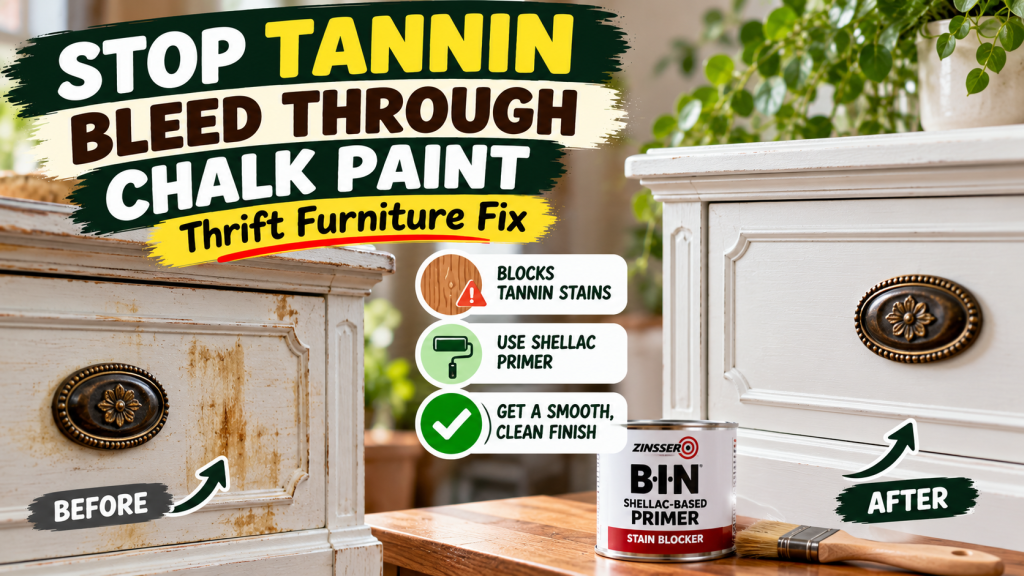
How to Stop Tannin Bleed Through Chalk Paint on Thrifted Furniture
Seeing yellow, amber, or reddish-brown spots appear through a fresh coat of chalk paint? The fix is usually a proper stain-blocking barrier—often a shellac-based primer—applied before you repaint.
Tannin bleed-through can spoil an otherwise beautiful thrift-store furniture makeover. You clean the piece, apply chalk paint, and the finish looks promising—then brown or yellow marks slowly appear through the pale paint. It is frustrating, but you usually do not need to strip the whole piece back to bare wood.
On stained, older, or tannin-rich wood, moisture and some paint or topcoat systems can draw discolouring compounds into the finish. Woods such as oak, mahogany, cedar, and some pine can be prone to staining, and old finishes may contribute as well. Chalk paint can adhere well to many surfaces, but it does not automatically block every stain.

How to Identify Tannin Bleed-Through
Look for yellow, tea-coloured, amber, pinkish, or reddish-brown marks that appear through white, cream, pale grey, or other light chalk paint. The marks may show up around knots, grain lines, edges, drawer fronts, or across a larger stained area.
Bleed-through is different from simple poor coverage. If the coat looks evenly thin, another coat of chalk paint may help. If brown or yellow discolouration is appearing through a fully covered surface, adding more chalk paint alone often will not solve the underlying problem.
Also rule out moisture, grease, old polish, wax, and other contaminants. Rust-Oleum notes that late-appearing stains can sometimes be caused by moisture within the surface; any moisture source must be corrected and the piece allowed to dry before it is sealed.
Why Does It Happen on Thrifted Furniture?
Second-hand furniture often has an unknown history. It may have been stained, varnished, waxed, polished, or refinished more than once. Older pieces can carry oil-based stains or finishes, while exposed knots and certain woods naturally contain compounds that can discolour a new finish.
Chalk paint is popular for thrift flips because it offers a matte, decorative finish and often needs little sanding on suitable surfaces. However, chalk paint is not the same thing as a dedicated stain-blocking primer. A barrier coat is sometimes necessary before applying a light topcoat.
How to Stop Tannin Bleed Through with Shellac Primer
- Let the existing paint dry.
Do not seal a damp surface or trap moisture under the next coating. If the marks are appearing after a leak or water exposure, address that issue first and let the wood dry fully. - Clean the furniture and check for wax or grease.
Remove dust and grime. Use a suitable furniture-safe cleaning method, then let the surface dry. Wax, oily polish, and grease can interfere with primer adhesion; remove them with a method compatible with the existing finish and your primer’s instructions. - Prepare the surface without unnecessary sanding.
Remove loose or flaking paint. If the existing finish is very glossy, a light scuff may help adhesion if the product instructions recommend it. Be cautious with older paint: sanding or scraping old coatings can create hazardous dust, including lead-containing dust. - Choose a stain-blocking shellac primer.
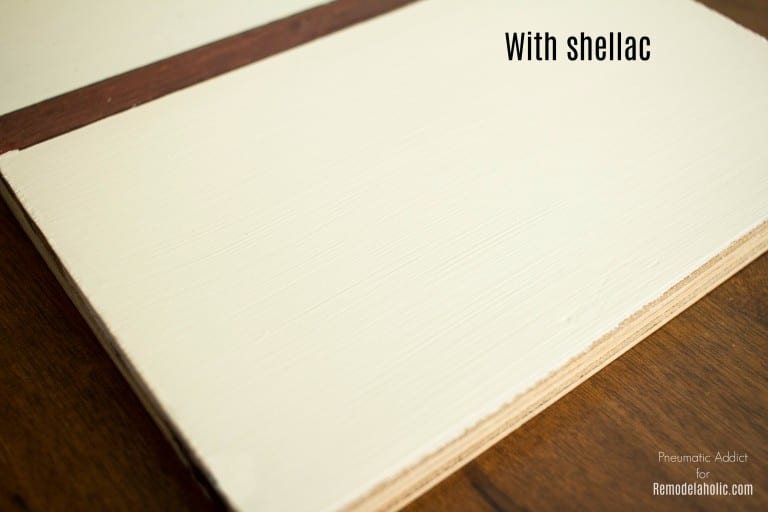
Use a product whose label specifically states that it blocks tannin or stain bleed-through and is suitable for interior furniture. A common example is Zinsser B-I-N Shellac-Base Primer. Check local product availability and use the exact product’s label as the authority. - Apply a thin, even coat across the affected surface.
Do not only dab the most obvious brown dots if a uniform light finish matters. Treat the whole affected face or area consistently to reduce the risk of patchy sheen or colour. Follow the label for brush, roller, or spray application. - Ventilate and observe the recoat time.
Shellac-based primers can contain flammable solvents. Work with strong ventilation, follow label PPE guidance, keep the product away from flames and ignition sources, and let the coat dry for the time stated on the can. For example, Rust-Oleum lists a 45-minute recoat time for its B-I-N shellac-base primer under normal conditions; other products and conditions can differ. - Check the surface, then add a second coat if needed.
Once the primer is dry, inspect for remaining discolouration. Heavy or persistent stains may need another coat. Allow the final primer layer to dry as directed before applying chalk paint. - Repaint with chalk paint and test before sealing.
Apply thin, even chalk-paint coats. If you plan to use wax or lacquer, test the complete system on a hidden area first: some topcoats can draw stains back through if the barrier is incomplete or incompatible.
Mistakes That Can Make the Stains Return
| Mistake | Why it causes trouble | Better approach |
|---|---|---|
| Painting extra chalk-paint coats only | More decorative paint may not block the stain source. | Use a compatible stain-blocking primer, then repaint. |
| Priming over wax, grease, or dust | The barrier may not adhere reliably. | Clean and prepare according to the primer label. |
| Coating before the surface is dry | Moisture can contribute to later discolouration or coating failure. | Find the moisture source and allow the furniture to dry fully. |
| Applying topcoat before the primer is ready | Insufficient dry time may affect adhesion or finish quality. | Follow the product’s recoat and cure directions. |
| Priming only isolated dots on a large visible panel | Differences in absorption or sheen may show through the finish. | Consider priming the entire affected panel for a more even result. |
| Using a water-based primer that does not block the stain | Some stains can migrate through primers not designed to block them. | Select a product explicitly rated for tannin/stain blocking. |
Are There Alternatives to Shellac Primer?
Yes. Some oil-based stain-blocking primers are designed to seal tannin stains, and certain water-based products are formulated for specific stain-blocking jobs. The best choice depends on the wood, the existing finish, indoor ventilation, and the chalk paint or topcoat you plan to use.
For stubborn brown or yellow bleed-through on thrifted furniture, shellac-based stain blockers are a common choice because they are specifically designed to seal many persistent stains. Always read the technical data and confirm that the primer is suitable for the intended surface and topcoat. Do not assume every primer marketed as “all-purpose” will block tannins.
How to Prevent Tannin Bleed-Through on Your Next Thrift Flip
- Do a hidden-area test. Apply your intended paint and topcoat system to a small area and observe it for discolouration before committing to the whole piece.
- Pay attention to wood and finish. Dark stained, knotty, resinous, or older furniture may need a stain-blocking barrier even when the first chalk-paint coat looks fine.
- Use a full, even seal where appropriate. A consistent primer layer across the affected surface is usually better for appearance than a collection of small spot patches.
- Follow product-specific drying times. Humidity, temperature, coat thickness, and the exact primer affect drying and recoating.
- Test the final topcoat. Wax or lacquer can sometimes reveal stains that seemed hidden after painting, so test the whole system first.
Frequently Asked Questions
Can I put shellac primer over chalk paint?
In many furniture-refinishing cases, a compatible stain blocker can be applied over dry chalk paint to seal stains that have begun to show. Confirm that the specific primer can be used over the existing coating, prepare the surface as directed, and test a small area first.
How many coats of shellac primer do I need?
One even coat may block mild staining, while persistent or heavy stains may require a second. Inspect the dry primer before repainting and follow the product label for coat thickness and recoat timing.
Will another coat of white chalk paint cover brown stains?
It may hide them briefly, but it will not reliably stop tannins or old stain from migrating through the finish. A suitable stain-blocking primer is the more dependable fix when true bleed-through is the issue.
Why did stains appear after I applied wax or lacquer?
Some finishing products can draw tannins or existing stains toward the surface, especially on wood and with light paint colours. Test your full finishing system and seal the entire affected surface with a compatible blocker before repainting and refinishing.
Do I need to strip all the old finish off?
Usually not just to stop tannin bleed-through. A sound, clean existing finish may be sealed with an appropriate primer. However, wax, grease, loose coating, moisture damage, or adhesion problems must be dealt with first, and some surfaces may need additional preparation.
Make Your Thrift Flip Last
Brown stains breaking through your chalk paint do not necessarily mean your furniture makeover is ruined. Identify the source, prepare the surface, apply a compatible stain-blocking primer, and test before adding the final finish.
Explore more practical home, DIY, and sustainable-living guides at Before We Sleep.
Sources and Further Reading
- Annie Sloan: How to Prepare a Surface for Chalk Paint — explains when shellac or a stain blocker may be needed.
- Annie Sloan FAQs — discusses bleed-through from stained wood and the effect of topcoats.
- Rust-Oleum Zinsser B-I-N Shellac-Base Primer — product use, stain-blocking claims, and application guidance.
- Rust-Oleum: Tannin Staining — causes and recommended stain-blocking approaches.